Types, Procedure, Lifespan, Benefits, and What to Expect
Author; S.Raj, M.D, Updated: 7/22/2026 Reading Time: 5 Minutes
Dental Crowns Explained
Imagine biting into your favorite crunchy snack, only to feel a sharp twinge in your tooth. Whether it’s from decay, an old filling, or a sudden crack, dental crowns are a reliable solution dentists use every day to restore comfort and function. If you’re wondering how crowns work, what to expect, and how long they last, this guide breaks down everything patients and families need to know—clearly and simply.
Dental Crowns: What You Need to Know
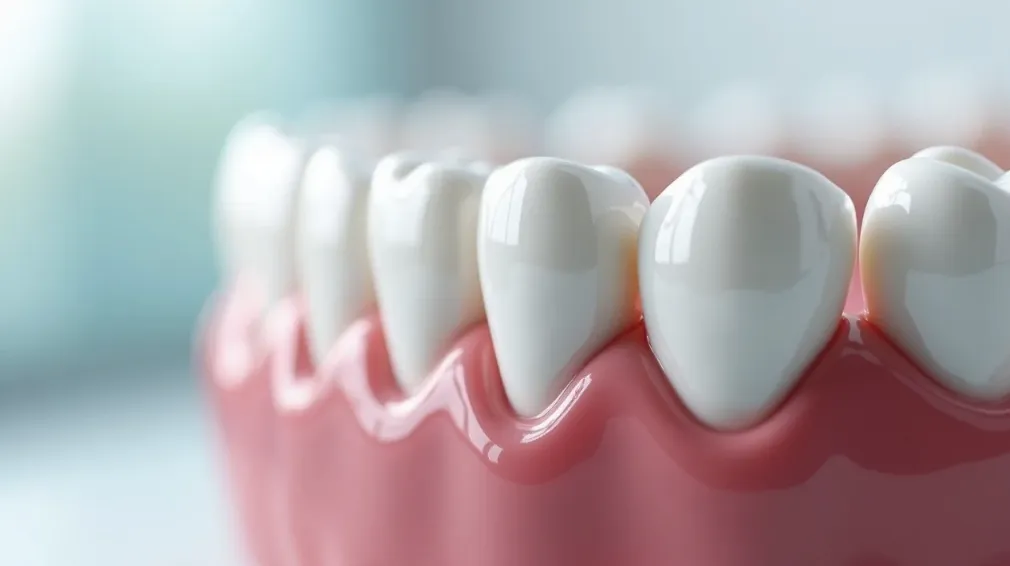
Dental crowns restore strength, function, and appearance to teeth weakened by decay, fracture, or large fillings – giving patients renewed comfort and confidence.
Dental crowns, sometimes called "caps," are among the most common restorative procedures performed in dentistry today. They envelop a weak or damaged tooth to protect it, restore its natural appearance, and allow you to chew comfortably again. Whether your dentist recommends a crown after a root canal, to repair a fracture, or to upgrade a large filling, understanding the procedure and your options puts you in control of your oral health. Crowns can be made from a variety of dental materials—from all-ceramic for front teeth, to gold and metal alloys for extra durability in back teeth—making them customizable for esthetics, function, and your unique smile needs. Throughout this comprehensive article, you’ll discover practical answers to your most pressing questions about dental crowns: why they’re needed, how they’re made, and what you can expect every step of the way.
What You'll Learn in This Guide to Dental Crowns
Definition and purpose of dental crowns
Why crowns are recommended for various dental issues
Types and materials of dental crowns
Step-by-step crown procedure explained
Longevity and maintenance of dental crowns
Complications and troubleshooting dental crowns
Patient tips for optimal crown outcomes

What Is a Dental Crown? Definition and Purpose
Definition of dental crown: A dental crown is a custom-made restoration that completely covers a weak, cracked, or heavily restored tooth, restoring its shape, strength, and appearance. It acts as a protective “cap” to prevent further damage and support chewing function.
How crowns restore function and aesthetics: Crowns reinforce teeth weakened by large cavities or fractures, providing long-lasting support. They’re color-matched to blend seamlessly with your natural teeth, recreating a natural appearance so you can smile and eat confidently.
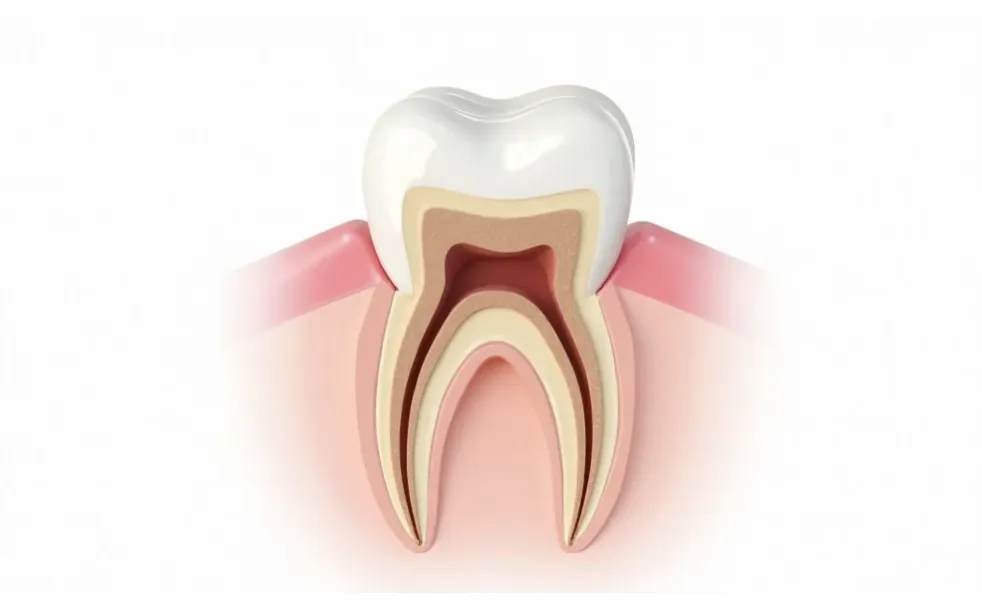
Basic anatomy: A typical crown consists of a single solid piece that fits snugly over the visible portion of your tooth, covering it entirely above the gum line. The underlying tooth is carefully shaped so the crown fits precisely, ensuring a comfortable bite and natural look.
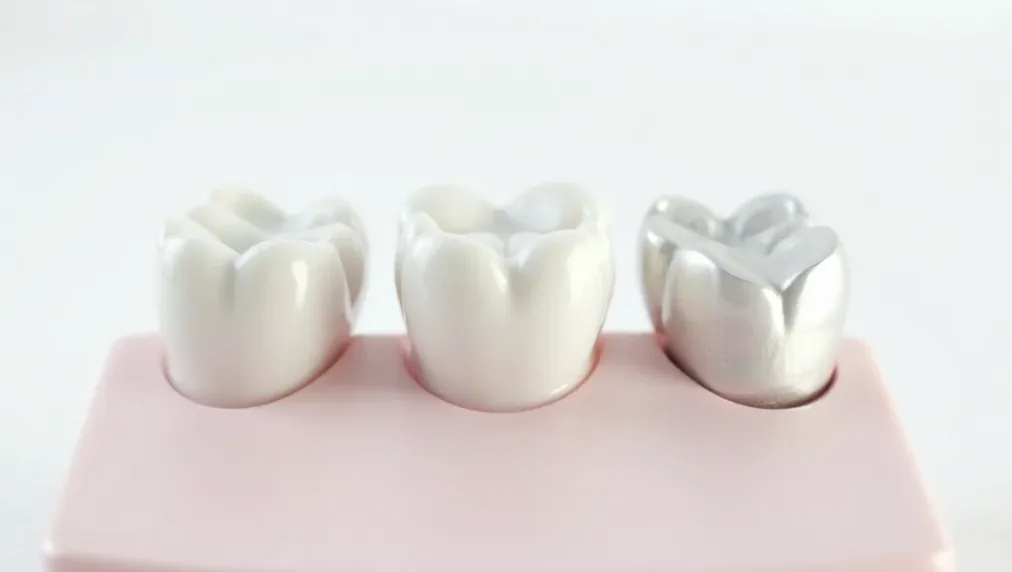
Dental crowns are custom-designed to match the color, shape, and size of your original tooth, blending in with the rest of your smile. They can be made from ceramic, porcelain-fused-to-metal, zirconia, metal alloys, or gold, allowing your dentist to choose the best material for your needs and preferences.
Why Dentists Recommend Dental Crowns
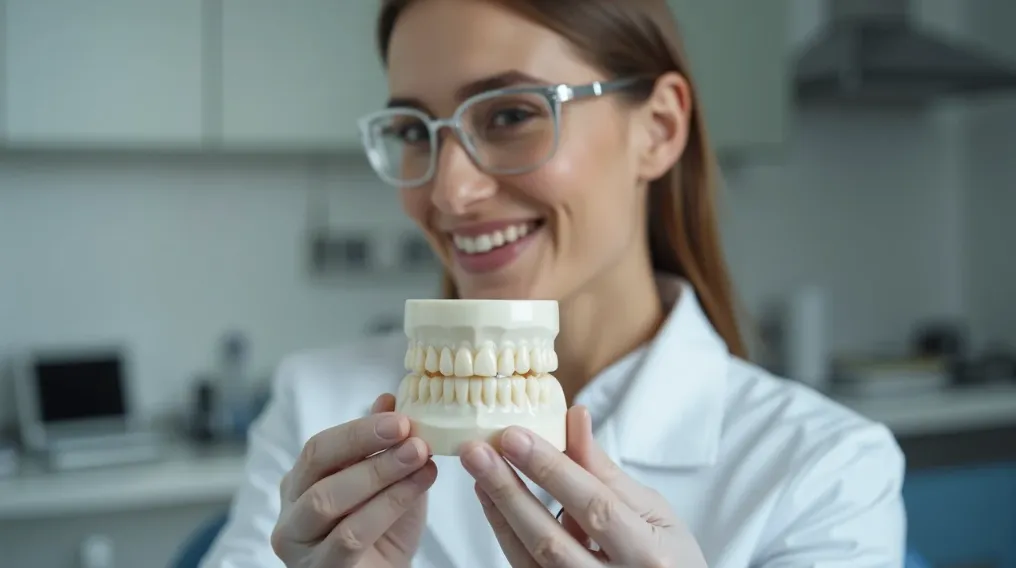
When a tooth is too damaged for a simple filling, a crown is recommended for long-lasting protection
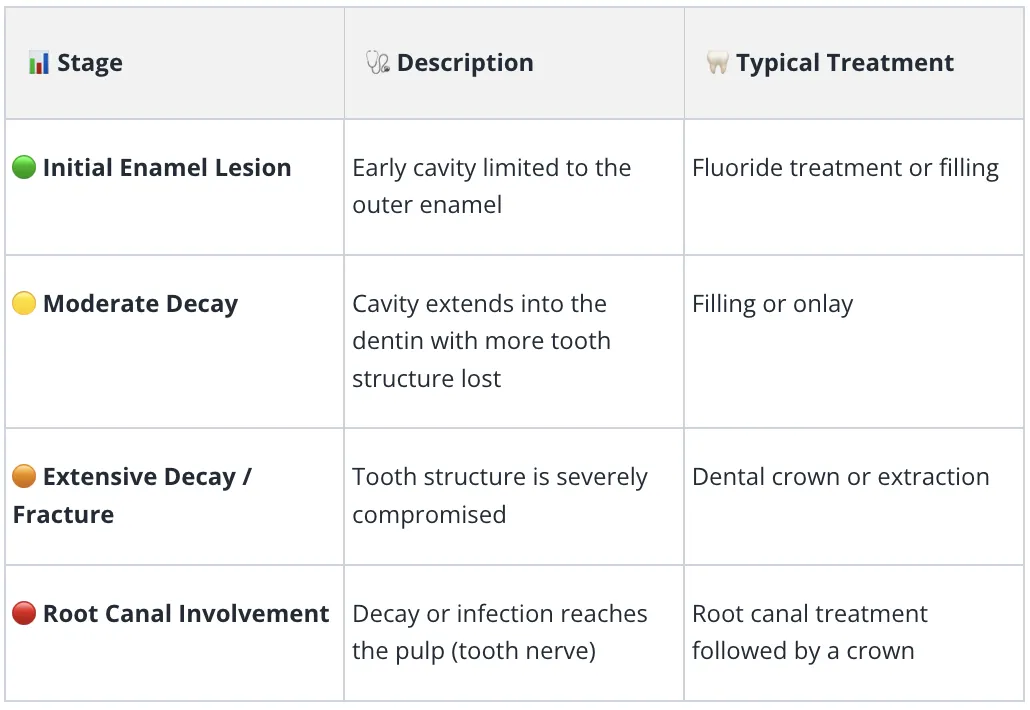
Large cavities or extensive decay—when more tooth structure is missing than a filling can restore—often require crowns to prevent tooth loss
Fractured or chipped teeth are stabilized and protected with crowns, preventing further cracking or sensitivity
Root canal-treated teeth are weaker and more likely to break; crowns provide reinforcement and protect against fracture
Worn or eroded teeth from grinding (bruxism), clenching, or acid wear can be rebuilt and protected by crowns
Cosmetic improvements: Crowns can cover severe discoloration, misshapen teeth, or close gaps, resulting in a more harmonious smile
Tooth Damage That May Need a Dental Crown
Stages of tooth decay: Early enamel changes can be treated with fillings, but deeper cavities mean more weakened tooth structure, often requiring a crown for long-term stability.
Fractures and cracks: Cracked or split teeth can worsen over time, leading to pain or infection if not stabilized with a crown.
Old fillings: Large, broken, or leaky fillings weaken a tooth, increasing the risk of further breakage and the need for crown coverage.
Bruxism or erosion: Habitual grinding, clenching, or acid wear can flatten or weaken teeth. These situations may benefit from crowns to restore normal shape and function.
Types of Dental Crowns: Materials, Pros and Cons
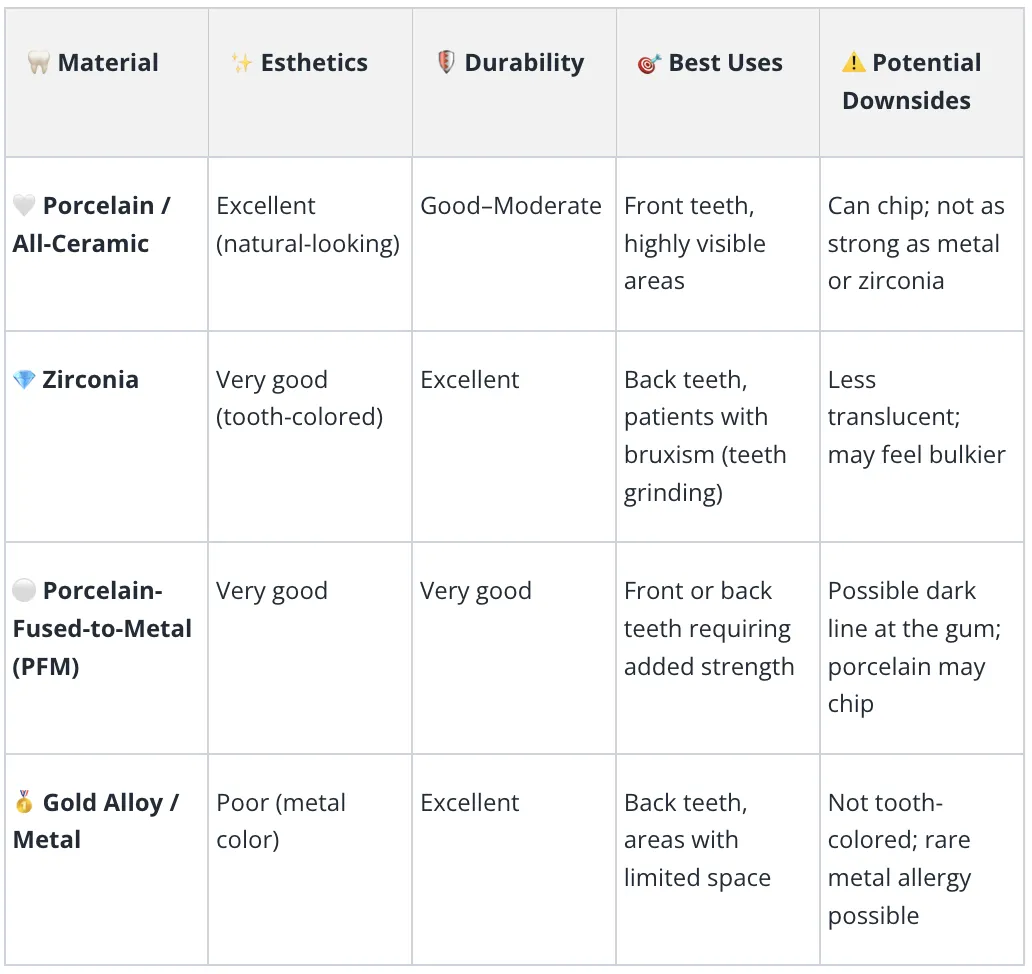
Dental crowns come in various materials, each with unique benefits and recommended uses. Understanding the types helps you make informed choices when discussing treatment with your dentist.
If you're interested in exploring more about dental services and finding the right provider for your needs, you can browse a curated list of top-rated dental professionals in at this comprehensive dentist directory. This resource can help you compare options and connect with experienced dentists for restorative treatments like crowns and more.
Porcelain Crowns: Aesthetic and Durable
Natural appearance: Porcelain crowns resemble natural teeth thanks to their translucent quality. They’re a top choice for visible front teeth due to their esthetic appeal.
Best use: Porcelain crowns are ideal for patients who prioritize a natural look, especially for teeth shown when smiling.
Porcelain-fused-to-metal crowns (PFM): These combine porcelain’s looks with the strength of a metal substructure. While durable, PFMs can sometimes show a thin, dark line near the gum line as gums recede.
Porcelain crowns are designed to provide both esthetics and moderate durability. When bonded well, they often last for many years. Their main limitation is that they can wear down opposing teeth and may chip if subjected to heavy biting forces.
Zirconia Crowns: Strength Meets Esthetics
Features: Zirconia crowns are renowned for their durability and fracture resistance. They offer a tooth-colored, metal-free alternative for both front and back teeth.
Zirconia vs Porcelain: Zirconia tends to be stronger and more resistant to chipping than pure porcelain crowns, though sometimes slightly less translucent (less lifelike) in appearance.
Ideal cases: Heavily damaged molars, patients who grind or clench, or anyone who wants durability without sacrificing esthetics.
Zirconia is one of the newer dental materials and is favored for its biocompatibility—meaning it’s accepted by your body and isn’t likely to cause an allergic reaction. More dentists are now recommending zirconia crowns as a long-lasting, esthetic choice.
Metal Crowns: Longevity and Biocompatibility
Types: Metal crowns may be gold alloys, base metal alloys (such as nickel-chromium), or platinum-based materials. Gold crowns are valued for their durability, while base metals are an economical choice.
Best suited: Metal crowns are generally used for back teeth (molars) that endure the most biting force and are less visible. Their thinness helps preserve more natural tooth.
Comparison: Metal crowns resist chipping and breaking, often outlasting other types. However, their metallic look is less desirable for front teeth, and some patients may prefer tooth-colored options.
Metal crowns, especially gold, are the gold standard for longevity. These crowns are less likely to cause wear on opposing teeth and are preferred in cases where space is limited, or maximum strength is needed.
Same-Day Dental Crowns: CAD/CAM Technology
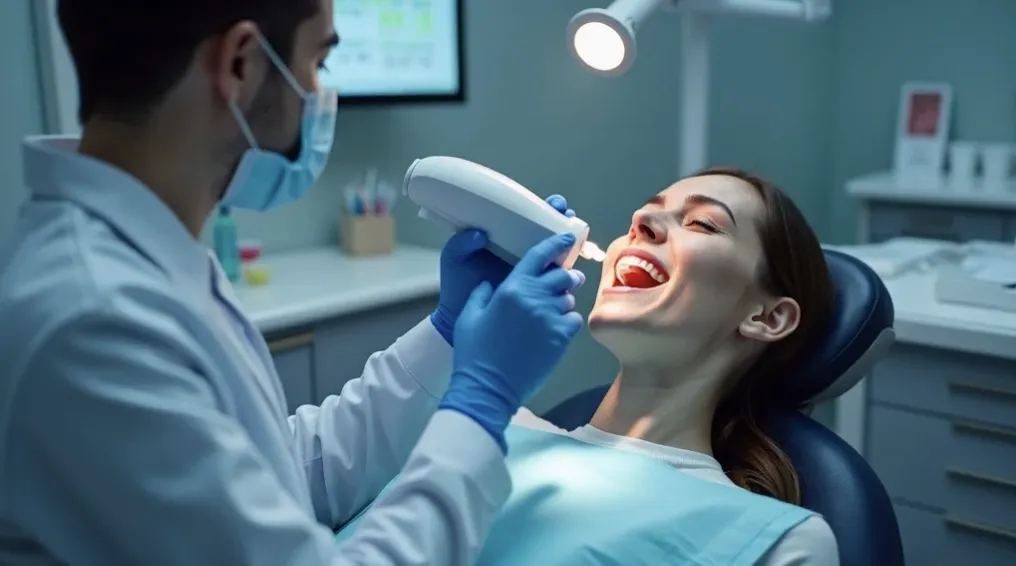
Same-day crowns: Some modern dental offices offer same-day crowns made with CAD/CAM (computer-aided design/manufacturing) technology. Digital scans of your tooth are used to design and mill a ceramic crown onsite within hours.
Traditional vs same-day: Conventional crowns generally require two visits and a waiting period, while same-day crowns can be completed in one appointment. The materials may differ, with same-day crowns typically all-ceramic.
Benefits & limitations: Fast results and no need for a temporary crown; however, customization options may be more limited, and not all cases are suitable for same-day crowns.
Choosing the best dental crown material depends on your tooth’s location, your bite, aesthetic goals, and your dentist’s recommendation.
The Dental Crown Procedure: Step-by-Step
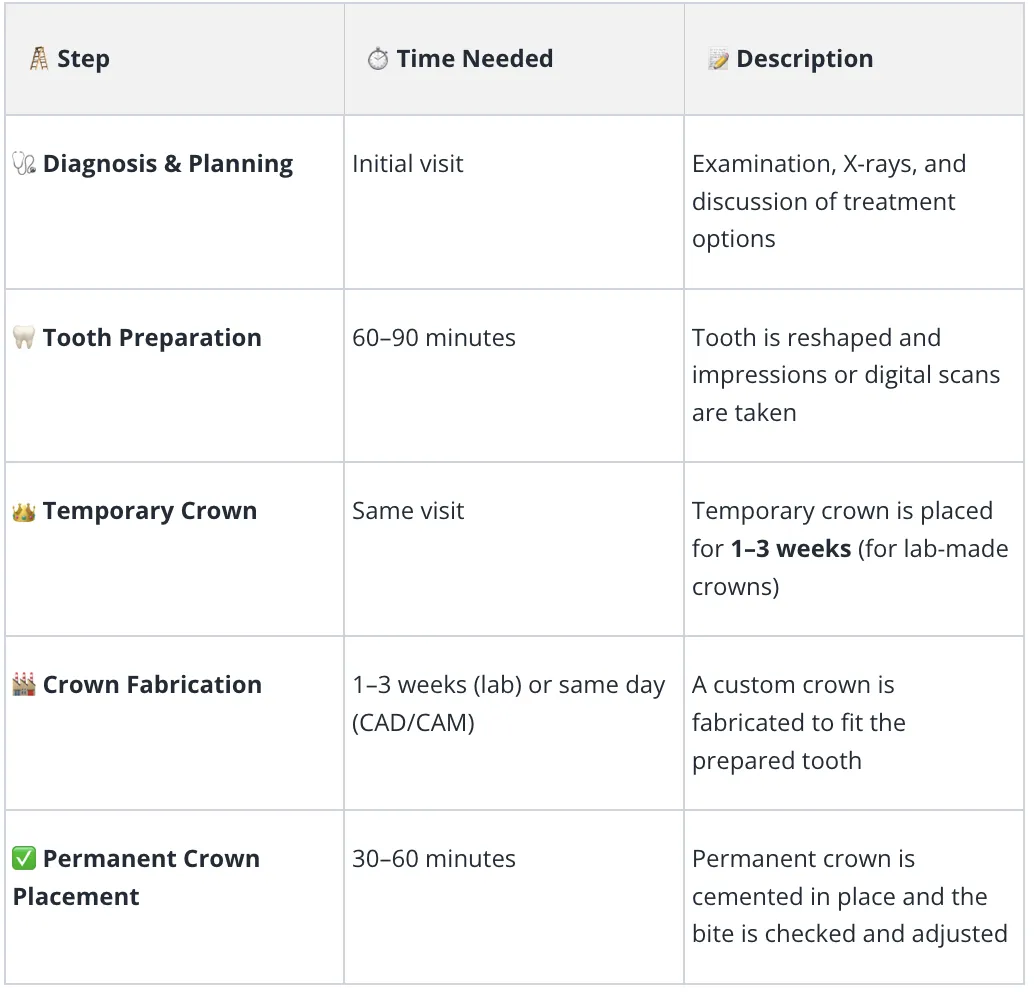
Examination and treatment planning: Your dentist will examine your tooth, take X-rays, and discuss crown options.
Tooth preparation/digital impressions: The tooth is gently reduced (shaped), and impressions—either traditional molds or digital scans—are taken to create an accurate model.
Temporary crown: A temporary crown protects your tooth while the permanent crown is crafted.
Laboratory fabrication/same-day milling: Your final crown is custom-made in a dental lab (or milled onsite for same-day options).
Permanent crown placement and bite check: At your second visit, your dentist checks the crown’s fit, color, and shape, then bonds it in place, adjusting your bite if necessary.
Crown adjustment if needed: Minor tweaks may be required after placement to ensure comfort and a secure fit.
Dental Crown Procedure Timeline
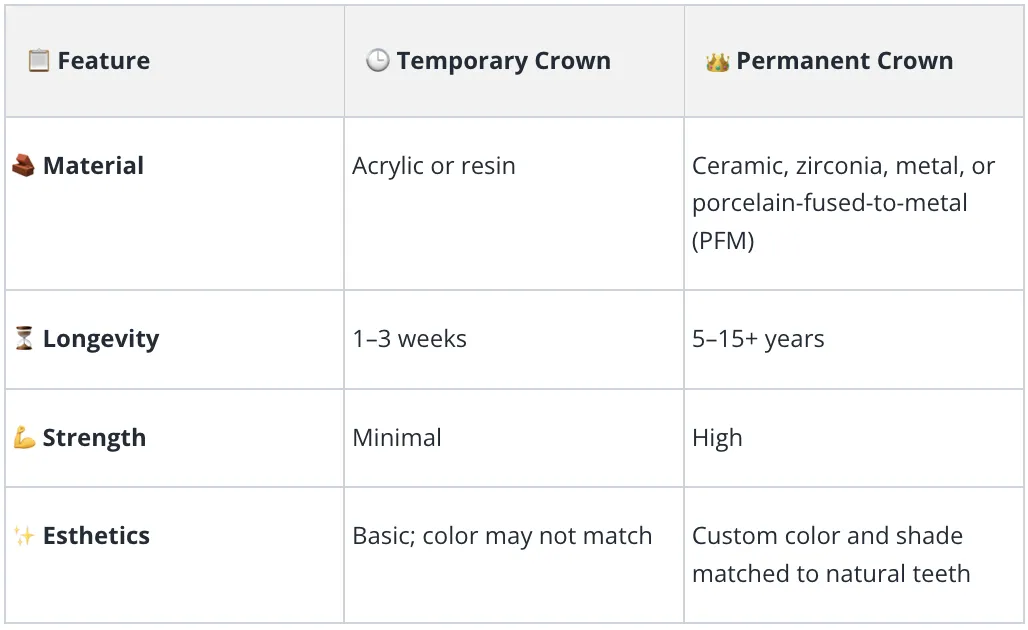
Temporary Crown vs Permanent Crown
What Is the Dental Crown Procedure?
Prepare the damaged tooth and take impressions.
Fit a temporary crown while your permanent crown is crafted.
Return for the final fitting, bonding, and bite adjustments.
Dental Crown Recovery and Aftercare
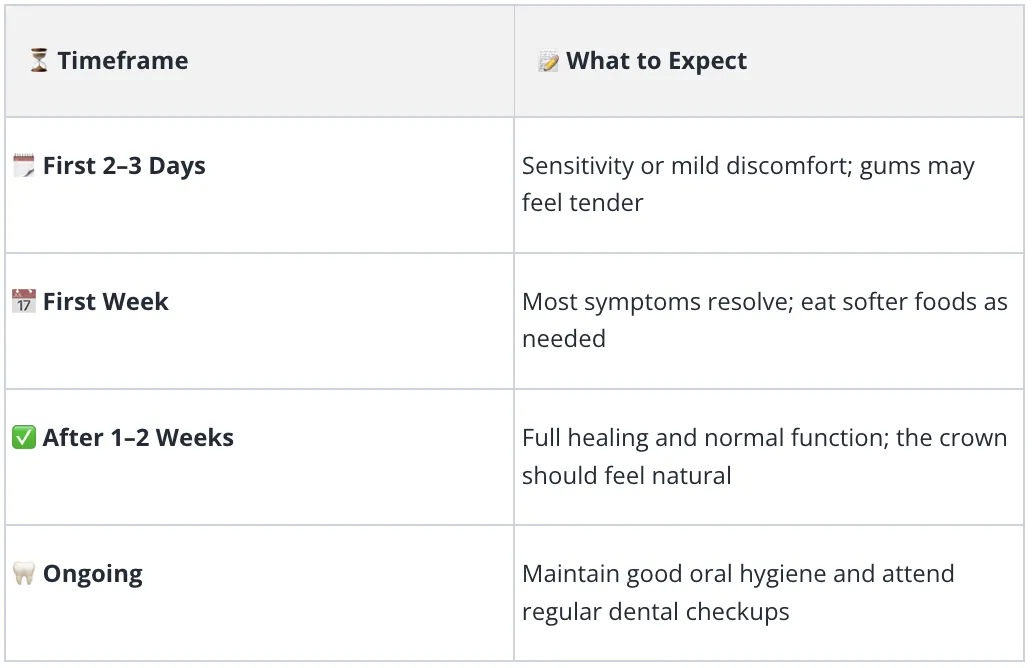
What to expect after your appointment: Mild soreness around the gums or biting sensitivity for a few days is common. This resolves quickly with time and gentle care.
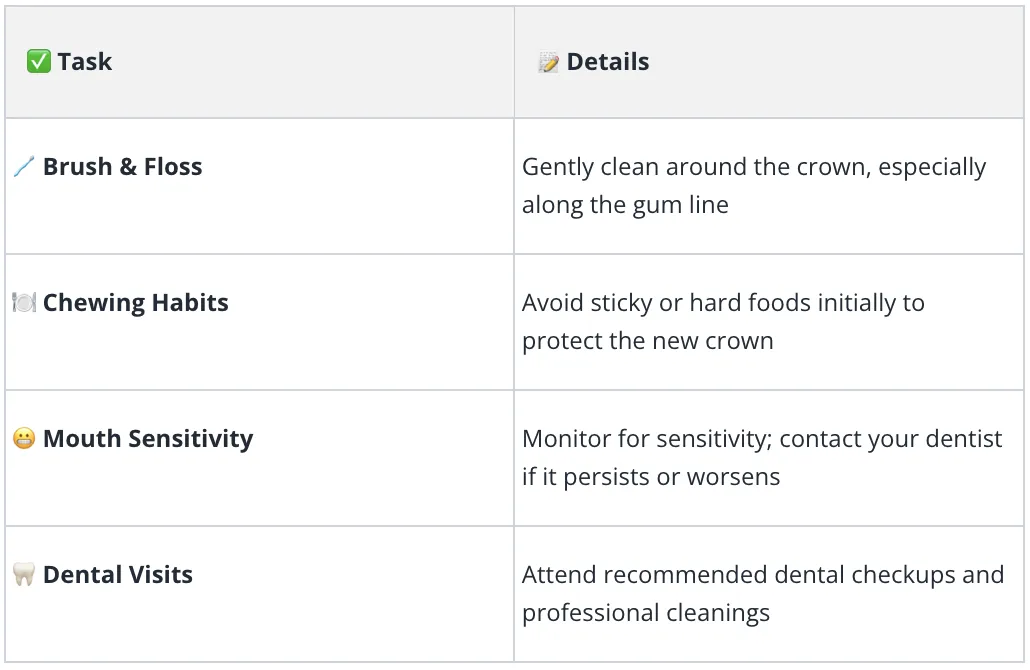
Eating, drinking, and hygiene: Avoid sticky or hard foods until your permanent crown is set. Brush and floss gently, paying special attention to the gum line.
Managing discomfort: Any sensitivity fades as your mouth adjusts. If discomfort persists, contact your dentist for an adjustment.
Warning signs: Persistent pain, swelling, or your crown coming loose requires prompt attention.
Recovery Timeline After Dental Crown Placement

Dental Crown Aftercare Checklist
How Long Do Dental Crowns Last? Lifespan and Durability
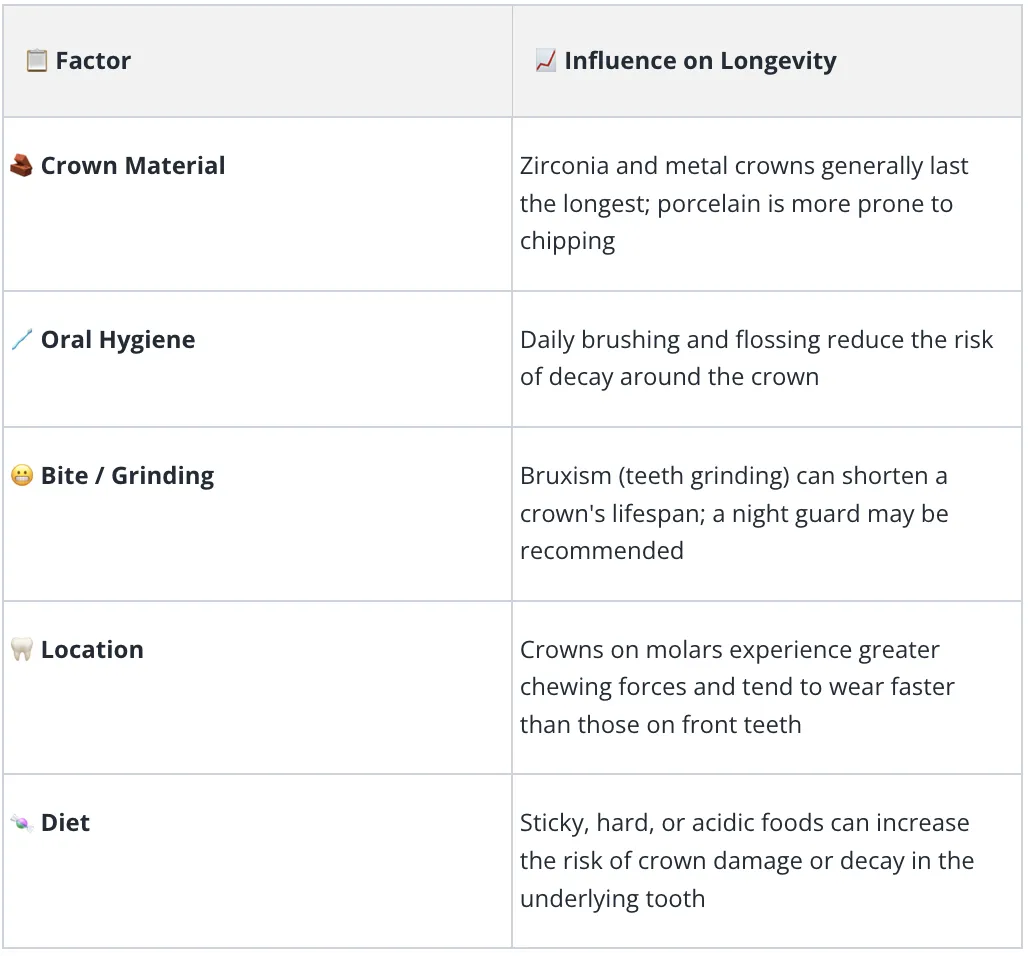
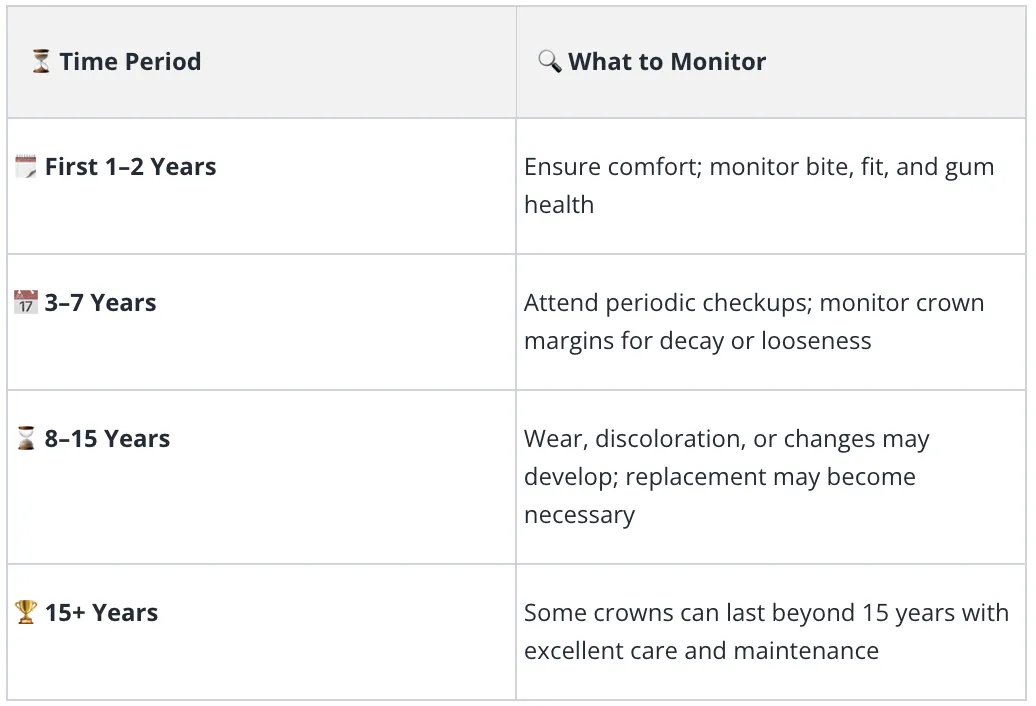
The average dental crown lasts between 5 and 15 years, though some last longer with excellent care. Lifespan depends on the material, your oral hygiene, your bite (especially if you grind or clench your teeth), and routine dental checkups. Crowns on back teeth may wear out faster due to heavy chewing, while those on front teeth often last longer when properly maintained.
Crown Lifespan Factors
Signs Your Dental Crown Needs Replacement
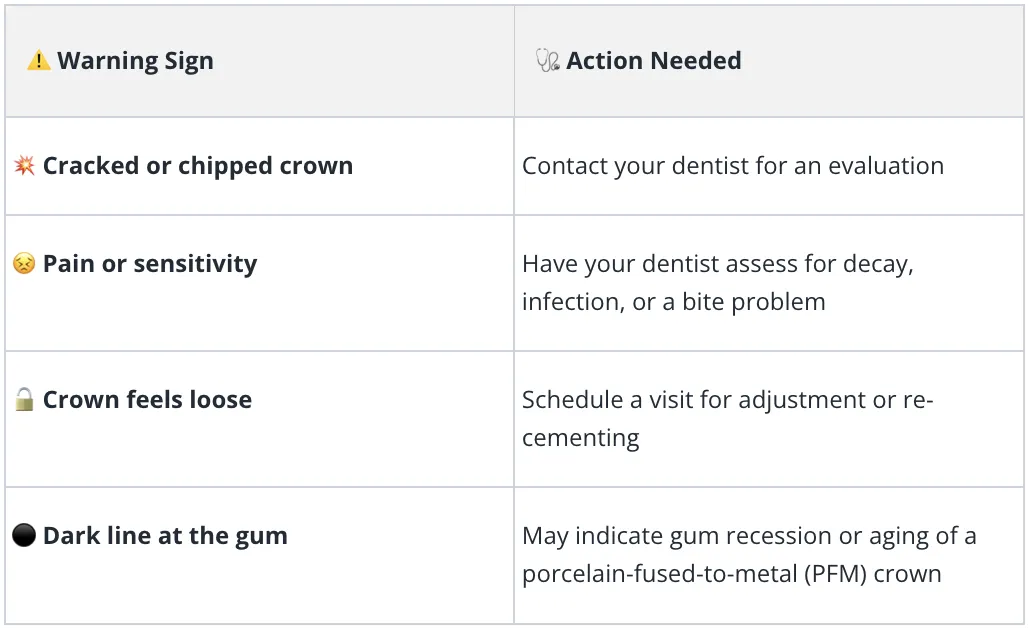
Worn, chipped, or cracked crowns: Noticeable defects, sharp edges, or changes in bite mean the crown is wearing out.
Recurrent decay under the crown: If decay is detected beneath the crown edge (margin), replacement is needed to prevent tooth loss.
Loose crown or discomfort: Movement or pain around the crown means it may need to be removed and remade for proper fit.
Signs Your Crown Needs Replacement
Common Dental Crown Problems and How to Prevent Them
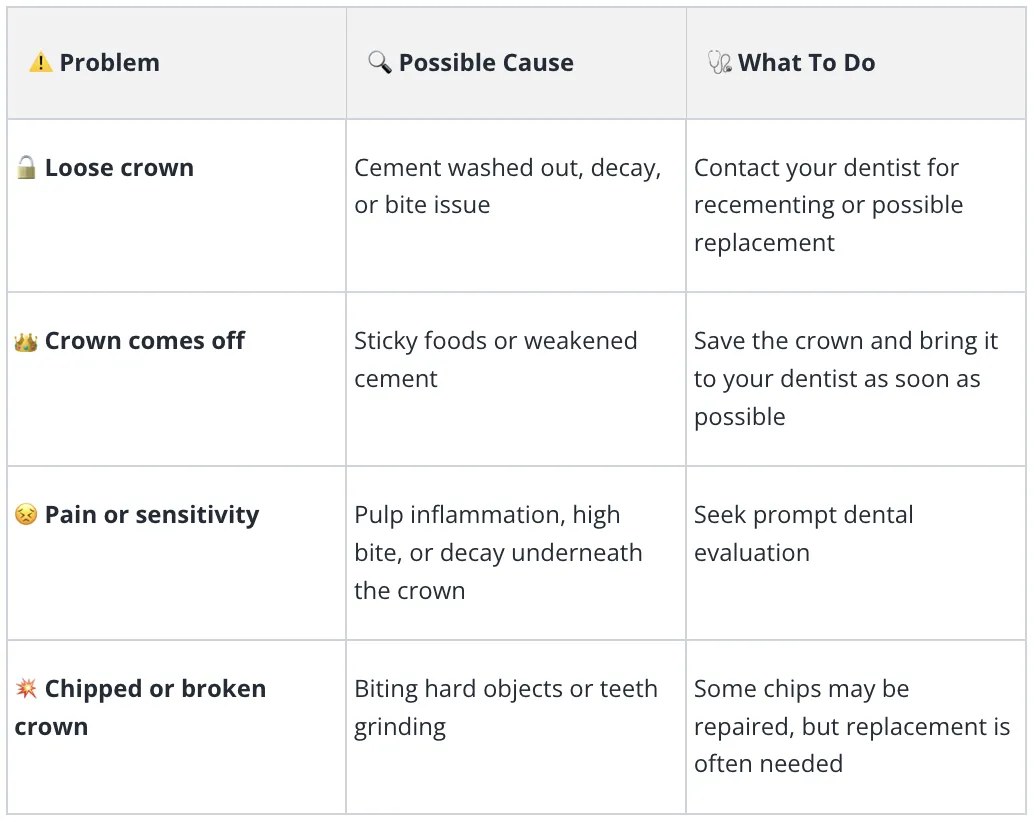
Potential issues: Though dental crowns are reliable, they can fail—chipping, breaking, becoming loose, or developing decay at the margins if not well cared for.
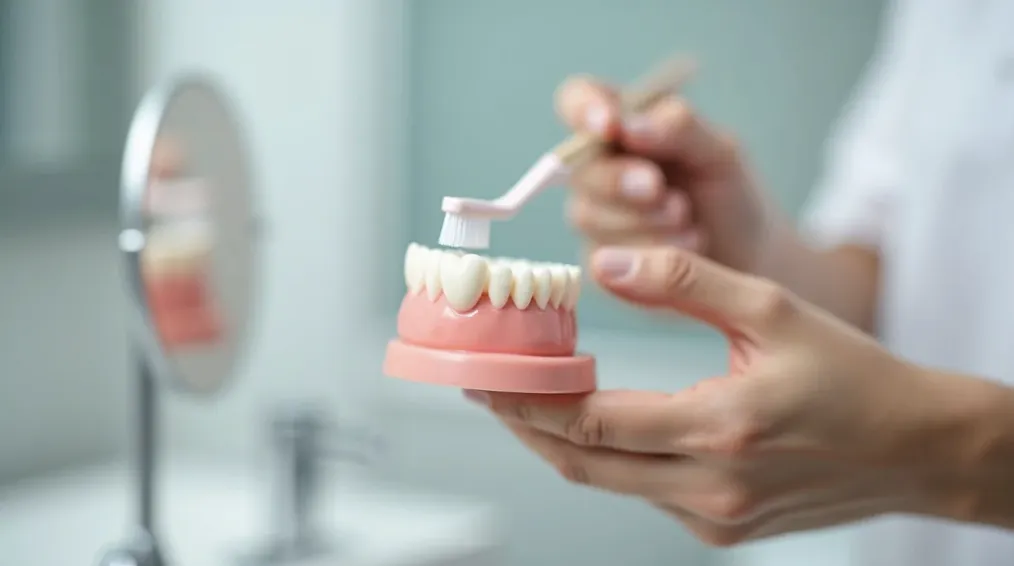
Prevention: Daily brushing, flossing, avoiding sticky/hard foods, and routine dental visits help prevent most issues.
Troubleshooting tips: If your crown feels loose or uncomfortable, do not try to fix it yourself—call your dentist for professional assessment and repair.
Common Crown Problems Troubleshooting Guide
Alternatives to Dental Crowns
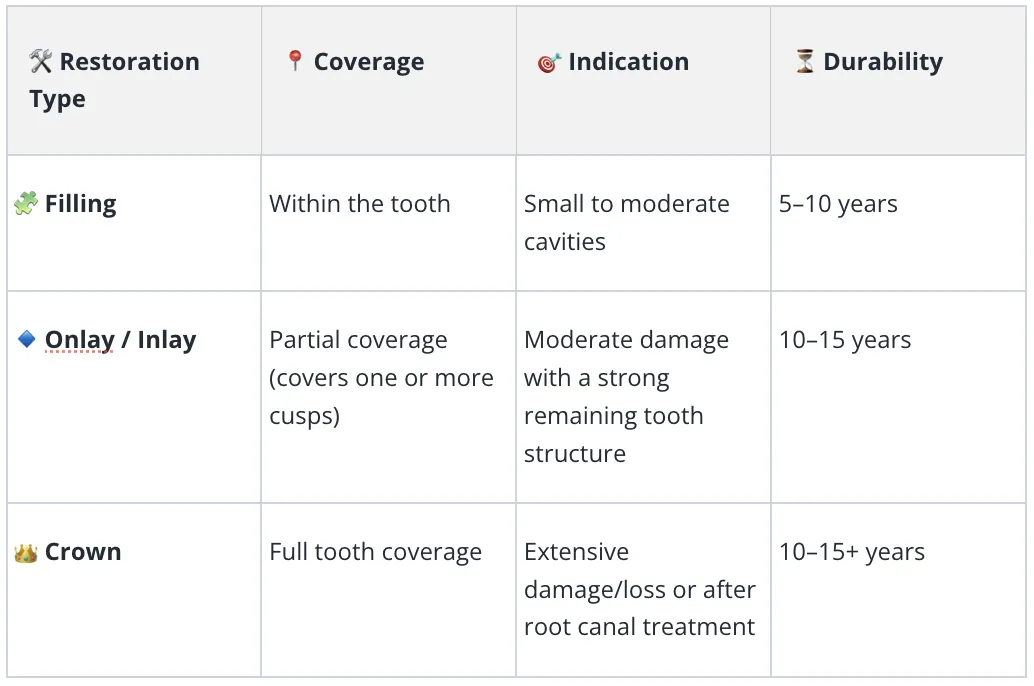
Dental fillings: Used for minor cavities or chips when most original tooth structure remains.
Onlays and inlays: Custom restorations covering part of a tooth—ideal when damage is moderate, but the tooth is strong enough to avoid a full crown.
Dental implant: For missing or non-restorable teeth, an implant-supported crown replaces both root and visible tooth.
Crown vs Filling vs Onlay Comparison Table
Patient Tips for a Successful Dental Crown Experience
Choose an experienced restorative dentist: Skill and precision ensure your crown fits right, functions well, and looks natural.
Practice excellent oral hygiene: Brush twice daily and floss carefully at the gum line to prevent decay underneath your crown.
Avoid hard foods: Especially immediately after crown placement, steer clear of ice, hard candy, or sticky foods.
Stay on schedule: Attend all recommended dental checkups to catch and fix any crown issues early.

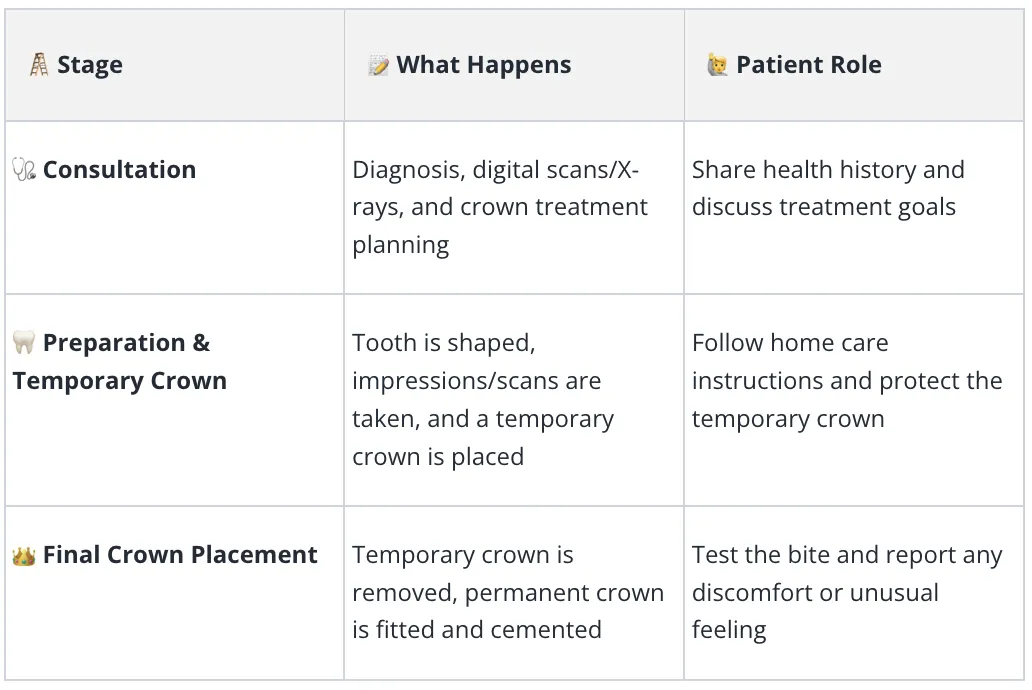
Crown Treatment Timeline: What to Expect at Each Stage
Pre-procedure Consultation and Planning
Your first visit focuses on thorough examination and diagnostic X-rays. Your dentist will review your treatment goals and answer questions about crown types, materials, and expected outcomes. This phase ensures your custom crown is tailored to your needs.
Tooth Prep and Temporary Crown
During the prep visit, your tooth is carefully shaped to receive a crown. Digital scans or impressions are made, then a temporary crown protects the prepared tooth. This phase prevents sensitivity and maintains oral function while your final crown is fabricated.
Permanent Crown Placement and Final Checks
At your second visit, the dentist removes the temporary crown, checks the final restoration for color, fit, and bite, and permanently cements it in place. You’ll leave with full chewing ability and a natural-looking smile.
Dental Crown Treatment Timeline
Crown Lifespan Timeline: How Long Will My Dental Crown Last?
People Also Ask: Expert Answers About Dental Crowns
What is a dental crown?
A dental crown is a tooth-shaped “cap” that covers a damaged or weakened tooth, restoring its strength, shape, size, and appearance while protecting it from further harm. Crowns are custom-made to blend with your natural teeth for a healthy, seamless smile.
Why would I need a dental crown?
You may need a dental crown to restore a tooth with a large cavity, protect a fractured or root canal-treated tooth, rebuild worn teeth, or enhance your smile cosmetically. Crowns are recommended when a tooth is too weak for a conventional filling or inlay.
Does getting a dental crown hurt?
Local anesthesia is used during the crown preparation visit, so you shouldn’t feel pain. Some patients experience minor gum or tooth sensitivity afterward, but this is temporary and manageable with over-the-counter pain relievers or as advised by your dentist.
What happens during the dental crown procedure?
Your dentist examines your tooth, shapes it for a crown, and takes impressions or digital scans. A temporary crown protects your tooth while the final crown is made. At your next visit, the permanent crown is fitted, checked for accuracy, and bonded securely in place.
How long does it take to get a crown?
Most dental crowns require two visits over one to three weeks: one for preparation and one for placement. Same-day crowns using CAD/CAM technology can often be completed in a single visit, depending on your dentist’s resources and your treatment needs.
What is the difference between a temporary and permanent crown?
Temporary crowns are made from acrylic or resin and protect your tooth for a short time while your permanent crown is crafted. Permanent crowns are stronger, custom-matched to your teeth, and designed for long-term function and esthetics.
Are porcelain crowns better than zirconia crowns?
Porcelain crowns offer excellent esthetics for front teeth, while zirconia crowns provide extra strength for back teeth or patients who grind. The best crown type depends on your tooth location, bite, esthetic goals, and dentist’s advice.
How long do dental crowns last?
Most dental crowns last between 5 and 15 years, but some can last longer with proper oral hygiene and routine dental visits. Durability depends on the crown material, your bite, and how well you care for your crown and natural teeth.
Can a dental crown fall off?
Crowns can come loose or fall off due to weak cement, decay, or chewing hard/ sticky foods. If this happens, save the crown and see your dentist promptly to have it re-cemented or replaced.
Can cavities develop under a dental crown?
Yes, decay can form where the crown meets the natural tooth—especially if plaque accumulates at the gum margin. Good brushing, flossing, and dental checkups are essential to prevent this type of decay.
Do I need a crown after a root canal?
Teeth that have undergone root canal treatment, especially molars and premolars, often need crowns for strength and lasting protection. Some front teeth may not require crowns if enough healthy tooth remains.
What should I avoid after getting a dental crown?
Avoid chewing hard, sticky, or chewy foods (such as ice, caramel, or hard candy) immediately after crown placement, especially while you have a temporary crown. Maintain gentle oral hygiene and follow your dentist’s aftercare instructions for optimal healing.
Can a dental crown be replaced?
Yes. Crowns showing signs of wear, damage, decay underneath, or recurrent problems can be replaced by your dentist. The process involves removing the old crown, addressing any underlying issues, and fitting a new, custom-made crown.
Is a crown better than a filling?
Crowns are recommended over fillings when too much tooth structure is missing for a filling to be stable or long-lasting. Fillings are ideal for small to moderate cavities, but crowns are needed for cracked, weakened, or root canal-treated teeth.
Dental Crowns FAQs
What is a dental crown?
A dental crown is a strong, tooth-shaped cap that covers and protects a damaged or weakened tooth, restoring its appearance and function. Crowns are custom-made for comfort and a natural look.Why do dentists recommend dental crowns?
Dentists recommend crowns to repair broken, decayed, or root canal-treated teeth that would otherwise be at risk for further damage or tooth loss.How is a dental crown placed?
The tooth is shaped to create space, then impressions are taken. A temporary crown is worn while the final restoration is made, which is later cemented in place.How long does the dental crown procedure take?
Traditional crowns require two visits (over 1–3 weeks), while same-day crowns may be completed in one appointment, depending on technology used.Does getting a dental crown hurt?
Dental crown procedures are performed with local anesthesia and cause little to no discomfort. Mild sensitivity may occur after treatment, resolving quickly.How long do dental crowns last?
Dental crowns typically last 5–15 years, and sometimes longer if maintained with good oral hygiene and regular dental care.What is the best material for a dental crown?
There is no single "best" material. The most suitable crown depends on tooth location, bite, esthetic goals, and your dentist’s recommendation.Can a crown fall off?
Yes, crowns can become loose or dislodged if cement fails or decay develops underneath. Contact your dentist promptly if a crown comes off.Can decay occur under a dental crown?
Decay can develop at the edge where the crown meets your natural tooth, especially if oral hygiene is lacking or the gum line recedes.How do I care for a dental crown?
Brush gently around the crown, floss daily, and maintain regular dental visits to prevent decay and ensure crown longevity.When should a dental crown be replaced?
Replace your crown if it’s cracked, loose, causing pain, or if decay is found underneath during dental exams.Do root canal-treated teeth always need crowns?
Most back teeth do, but not all front teeth. Crown recommendation depends on how much healthy tooth remains and the tooth’s location and function.
Ready to restore your smile with a dental crown, or have questions about your options? Contact us today—we’ll connect you with an experienced, patient-focused dentist near you for a personal consultation!
S. Raj, M.D. / Bestdentists.com
Director, Search Intelligence University/IABLEd
International Association for Business Leaders’ Education
Sources
https://medlineplus.gov/ency/article/007631.htm - Dental crowns: MedlinePlus Medical Encyclopedia
https://www.mouthhealthy.org/all-topics-a-z/crowns - Crowns
https://en.wikipedia.org/wiki/Crown_(dental_restoration) - Crown (dental restoration)
The IABLEd Growth Intelligence University
The Definitive Curriculum for Modern Dentistry and Oral Health
Praevenire. Curare. Sorridere.
Prevent. Treat. Smile.
Want Your World to Discover You,
the Easy Way?
Experience exceptional dental care while discovering the confidence of a healthier smile.
We provide the expertise, technology, and personalized treatment to help you achieve lasting oral health and beautiful, confident smiles. Ask us how.
Copyright 2026. Best Dentist Near Me. All Rights Reserved.


* * * * *
COMPANY
30721 Russell Ranch Rd Suite 140, Westlake Village, CA 91362
CUSTOMER CARE
Get In Touch
Mon – Thurs
10:00am – 4:00pm
Fridays by Appointment
Saturday, Golf
Sunday –hurch
LEGAL
Stay informed about how new technology can make or break a brand.
FOLLOW US


Prevent. Restore. Smile.
© 2026 IABLEd Dental Intelligence Academy | All Rights Reserved.
1: Oral Health Foundations 2: Preventive Dentistry & Patient Care 3: Restorative Dentistry & Treatment Planning 4: Advanced Clinical Techniques & Digital Dentistry 5: Cosmetic & Comprehensive Dental Care 6: Bonus Dental Masterclass Series