
Procedure, Pain, Recovery, Risks, and What to Expect
Author; S.Raj, M.D, Updated: 7/21/2026 Reading Time: 5 Minutes
Simple Tooth Extraction Explained:
Imagine sitting in a bright, modern dental office, feeling nervous about your upcoming tooth extraction. The dentist calmly explains each step, reassures you about comfort and safety, and answers your questions. Today, dental technology and compassionate care combine to make tooth extractions safer and less stressful than ever before.

Tooth extraction can feel intimidating, but advancements in oral surgery make procedures safer and more comfortable than ever.
Modern dental extraction techniques focus on minimizing pain, promoting fast healing, and preserving overall oral health.
Facing Tooth Extraction: What You Need to Know and Expect

If your dentist or oral surgeon has recommended a tooth extraction, you may understandably feel apprehensive. However, extractions today are a well-controlled, frequently performed dental procedure with a high degree of safety and predictability. The primary aim is always to protect your oral health—either by removing a tooth that’s beyond repair or paving the way for successful future treatments.
You can expect your dental team to explain the rationale for extraction, review your dental and medical history, and discuss anesthesia options to ensure you feel at ease. Most simple extractions take less than an hour and focus on swift recovery and lasting comfort. Understanding what happens before, during, and after a tooth extraction can ease worries and help you heal smoothly.
What You'll Learn About Tooth Extraction
What is a simple tooth extraction and how it works
Why and when tooth extraction may be necessary
Step-by-step breakdown of the extraction process
Pain management and anesthesia options
Complete recovery and aftercare guide
Risks, complications, and how to identify them
Tooth replacement solutions after extraction
Frequently asked questions answered by dental professionals
What Is a Simple Tooth Extraction?
A simple tooth extraction refers to the removal of a tooth that is visible and easily accessible in the mouth by a general dentist or oral surgeon. This is performed on teeth that aren’t broken below the gum line or stuck in the jawbone.
This approach is quite different from a surgical extraction, which is used for teeth that are impacted, fractured below the gums, or require an incision into the gum to be removed.
Simple extractions are appropriate when the tooth is intact, has a single straight root, and doesn’t require surgical access.
Simple Extraction vs Surgical Extraction
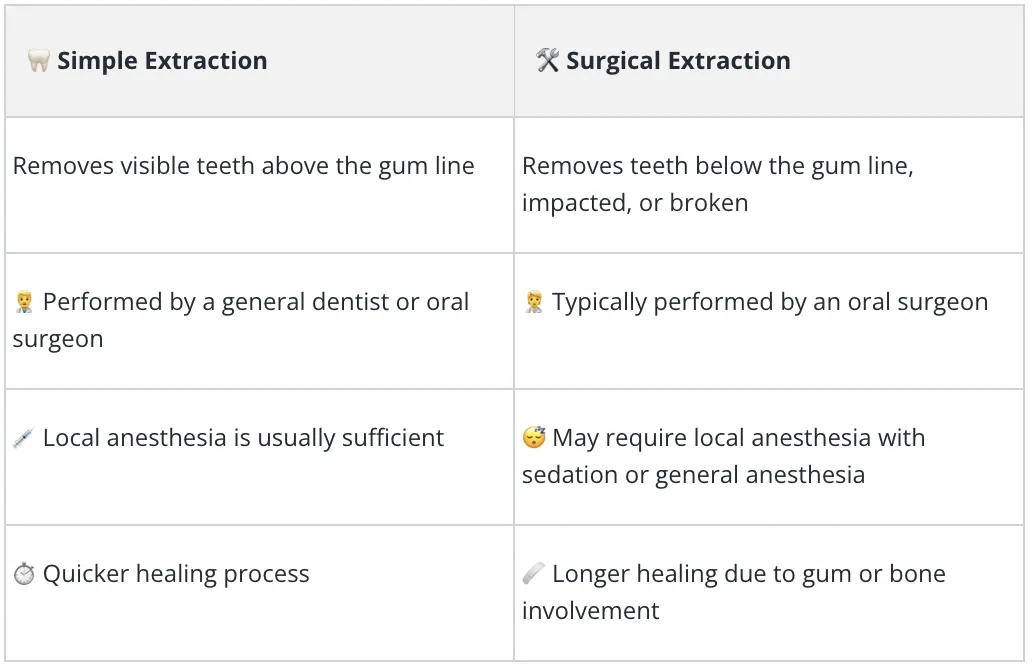
Indications for each type of dental extraction depend on the tooth’s visibility, position, and integrity within the jaw.
Surgical extractions are generally more complex and require a longer recovery period.
Simple extractions remove visible teeth; surgical extractions address teeth below the gum or with complications.
For those interested in understanding how dental professionals determine the best approach for your unique situation, you can explore more about how dentists assess and plan for extractions and other oral health needs to ensure optimal outcomes.
Why Would a Tooth Need Extraction?
Severe tooth decay that cannot be repaired with crowns or fillings may require removal to prevent infection from spreading.
Fractures or broken teeth beyond repair, especially when the break extends below the gum line, can necessitate tooth removal.
Advanced gum disease may destroy the supporting bone, leaving the tooth unstable.
Dental infections or abscesses that do not respond to root canal therapy or antibiotics might need extraction to protect your health.
Orthodontic needs: Some patients require extraction of certain teeth to create space for healthy dental alignment or to relieve overcrowding.
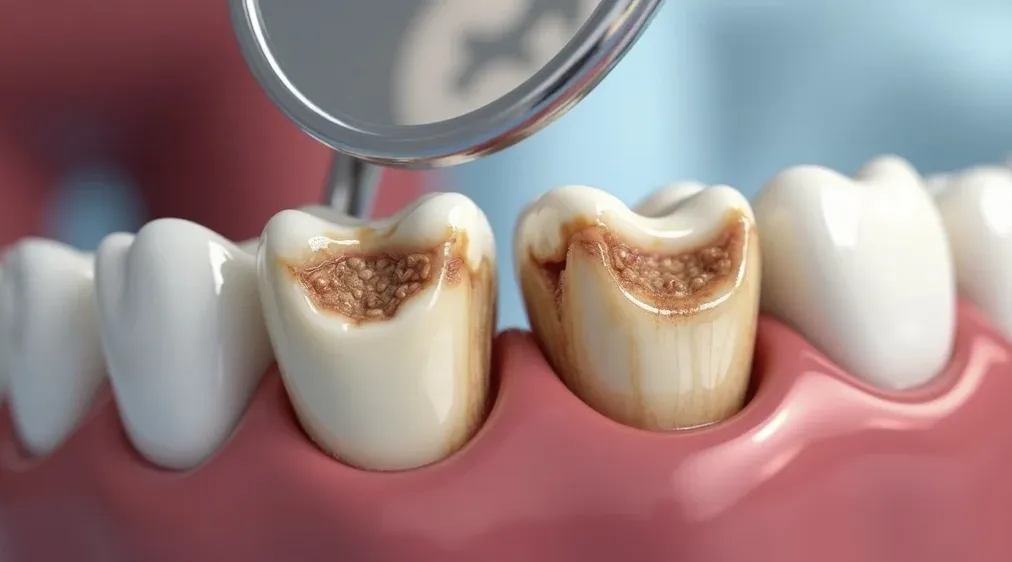
Myths vs facts: Tooth extractions are a last resort, not a routine solution. Whenever possible, your dentist or oral surgeon will prioritize saving your natural teeth with advanced restorative treatments.
How Dentists Decide If Tooth Extraction Is Necessary
A comprehensive oral examination evaluates tooth condition, gum health, and surrounding bone.
Dental X-rays help your provider determine if a tooth can be saved or if extraction is safest for your overall well-being.
All available restorative alternatives (like fillings, crowns, or root canal therapy) are carefully considered before a tooth extraction is recommended.
The benefits and risks of tooth removal are weighed, with clear communication to help you make an informed decision as part of your treatment plan.
Dentists and oral surgeons prioritize saving natural teeth whenever possible. Extraction is only recommended after all options are reviewed and discussed with you.
Step-by-Step Simple Tooth Extraction Procedure

The tooth extraction procedure is safe, thoroughly organized, and carried out with your comfort as the highest priority. Here’s what you can expect:
Step 1: Examination and Preparation
Your dental team will review your dental and medical history to ensure a safe extraction.
Any health conditions, medications, or allergies are noted to prevent complications.
They assess whether local anesthesia alone is appropriate or if you require special accommodations.
Step 2: Local Anesthesia for Tooth Extraction
An injection is administered near the tooth to numb the area. Local anesthesia ensures you do not feel sharp pain during the procedure.
The numbing effect sets in within a few minutes, and your dentist will test the site before starting so you feel only gentle pressure, not pain.
Step 3: Tooth Loosening and Elevation
Once numb, special dental tools called elevators and forceps are used to gently loosen the tooth from its socket.
You may feel firm pressure or rocking but should not feel discomfort. If you experience pain, the dentist will pause and ensure you receive adequate anesthesia.
Step 4: Tooth Removal
The tooth is carefully lifted out, minimizing trauma to the gum and bone.
The area is checked for any fragments to ensure the site is clean and ready to heal.
Step 5: Gauze Placement and Recovery Instructions
Clean gauze is placed over the area so you can bite down and help a firm blood clot form—crucial for healthy healing.
Your dentist provides aftercare instructions. These may include instructions on how to manage discomfort, bleeding, swelling, or when to start gentle rinsing and oral hygiene.
Does Tooth Extraction Hurt? Patient Experiences and Pain Management
Local anesthesia used during the procedure numbs the area, ensuring minimal discomfort while your tooth is removed.
Most patients report feeling only pressure—not sharp pain—while the tooth is gently loosened and lifted from its socket.
After the numbness wears off, mild soreness or tenderness is normal. Your dentist recommends pain medication as needed to control discomfort in the first few days.
If you have dental anxiety or special comfort needs, always communicate with your provider for accommodations such as sedation options.

Tooth extraction is safe and tolerable for most patients—inform your dentist about any pain concerns to optimize your experience.
Tooth Extraction Recovery Timeline: What to Expect
First 24 Hours After Tooth Extraction
Your body begins healing by forming a blood clot at the extraction site—this protects the area and allows tissue to regrow.
It’s normal to have mild bleeding for a few hours; changing gauze and gentle pressure help control it. Avoid disturbing the clot to prevent complications.
First Week After Tooth Extraction
Swelling and discomfort typically peak in the first 2-3 days, then steadily improve.
Stick to soft foods (see below) and avoid chewing in the extraction area. Gentle brushing and salt-water rinses start as soon as your provider instructs.
Long-Term Tooth Extraction Recovery
The gum tissue will close within 1-2 weeks for most simple extractions.
Bone and tissue continue to remodel for several weeks after, so avoid trauma to the area and follow your provider’s advice about returning to normal activities.
Recovery checklist: Follow aftercare instructions, avoid tobacco and alcohol, eat a gentle diet, and attend all follow-up visits for best healing.
Tooth Extraction Aftercare: Do’s and Don’ts for Safe Healing
Firmly bite on gauze as directed to stop bleeding and help form a stable blood clot.
No smoking or using straws for at least 48-72 hours—these can dislodge the clot and slow healing.
Keep your mouth clean with gentle rinsing; avoid spitting hard or forceful swishing that could disturb the site.
Take all prescribed medications as directed and contact your provider if you experience problems.
Brush gently around the extraction site and use a salt water rinse when advised to help prevent infection.

Eating After Tooth Extraction: Safe Soft Foods List
Yogurt, applesauce, mashed potatoes, scrambled eggs for nourishment without risking injury to healing gums.
Avoid: Hard, crunchy, spicy, or hot foods until your dentist approves a normal diet again.
Oral Hygiene After Tooth Extraction
Begin brushing nearby teeth as soon as you’re comfortable, but avoid the extraction site for the first 24 hours.
After one day, gentle rinsing with a salt-water solution can promote healing and reduce bacteria.
Attend all follow-up appointments to confirm that your extraction site is healthy and healing properly.
Risks and Possible Complications After Tooth Extraction
Dry socket occurs when the blood clot is lost too early, exposing bone and causing pain; this is rare with good aftercare.
Recognize infection signs: increased pain, swelling, pus, or persistent bad taste. Call your dentist immediately if you notice these symptoms.
Small amounts of bleeding are normal, but excessive bleeding that lasts more than a few hours requires prompt dental attention.
Slight numbness is possible in surgical extractions if a nerve is nearby. Your dentist will inform you if this is a risk, especially for wisdom teeth.
Most complications are easily avoided with proper aftercare and following your provider’s instructions. If you’re unsure about any symptoms, call your dental office for advice.
Replacing a Missing Tooth After Extraction: Options and Considerations
Your dentist may recommend tooth replacement to restore your bite, avoid shifting of remaining teeth, and preserve jawbone health. Missing teeth can affect chewing and appearance if not replaced in key locations.
Common replacement options include: dental implants (a titanium post set in the bone), bridges (anchored to neighboring teeth), or removable partial dentures.
Dental implants offer the closest feel and function to natural teeth, help stimulate the jawbone, and are ideal for long-term oral health.
The timing for a replacement varies; sometimes a few weeks of healing are needed before placement, while immediate options are sometimes available for specific cases.
Discuss with your dentist if a tooth replacement is right for you after an extraction—each case is unique!
Step-by-Step Timeline: What Happens During a Simple Tooth Extraction
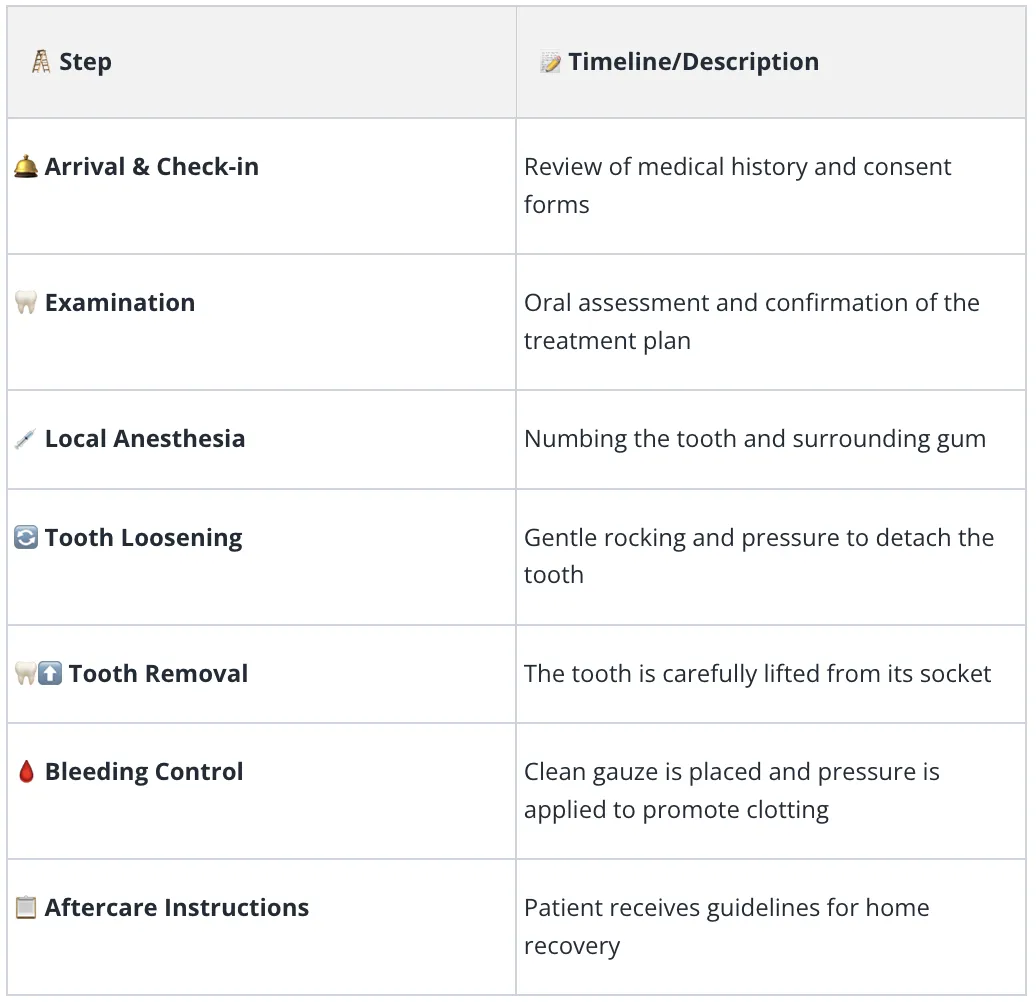
Timelines for each extraction stage are explained by your provider so you know what to expect and can feel reassured.
Frequently Asked Questions (FAQs) About Simple Tooth Extraction
What is a simple tooth extraction?
A simple tooth extraction is the removal of a tooth that is visible in the mouth and can be taken out without the need for surgical intervention. It is typically performed under local anesthesia by a general dentist or oral surgeon.
Why do dentists remove teeth?
Dentists may recommend removing a tooth if it is severely decayed, broken beyond repair, affected by advanced gum disease, unresponsive to root canal treatment, or to improve oral health as part of an orthodontic treatment plan.
How is tooth extraction performed?
After numbing the area with local anesthesia, the dentist loosens the tooth using special tools and gently removes it from its socket. Gauze is applied to control bleeding and aftercare instructions are given.
Is tooth extraction painful?
No, the procedure is not usually painful, thanks to local anesthesia. Most patients feel only pressure, not sharp pain. Some soreness afterward is normal and can be managed with recommended pain medication.
How long does extraction take?
A simple extraction generally takes between 20 to 40 minutes, from numbing to aftercare instructions. Recovery times vary, but most patients resume normal activities within a few days.
What happens after extraction?
You’ll bite down on gauze to form a blood clot, receive aftercare instructions, and manage any swelling or soreness with soft foods and proper hygiene. The area will gradually heal over 1-2 weeks.
How long does healing take?
Initial gum closure usually occurs in 1 to 2 weeks, while bone and tissue remodeling may take a few months. Most people return to daily routines quickly, and complete healing is monitored during follow-up visits.
What foods should I avoid?
Avoid hard, crunchy, spicy, or very hot foods. Stick to soft foods like yogurt, applesauce, mashed potatoes, or scrambled eggs until your dentist advises resuming your regular diet.
What complications can happen?
Possible complications include dry socket, infection, prolonged bleeding, swelling, or (rarely) nerve disturbance. Most are preventable with good aftercare—contact your dentist if you have symptoms like persistent pain, swelling, or fever.
What are tooth replacement options?
Common options are dental implants (permanent, feel like natural teeth), dental bridges (anchored to adjacent teeth), and removable dentures. Your dentist will discuss which is best for your needs and when replacement should be considered.
These answers provide practical guidance for patients considering or recovering from a simple tooth extraction.
People Also Ask
How long does it take for a tooth extraction to recover?
Full healing after tooth extraction typically occurs within a few weeks, though the initial gum closure happens within 1-2 weeks.
Is a tooth extraction painful?
With modern local anesthesia, most patients feel only pressure, not pain, during a tooth extraction.
Do and don'ts after tooth extraction?
Do bite on gauze, rest, and follow aftercare instructions. Don't smoke, use a straw, or disturb the clot.
Why is day 3 the worst after tooth extraction?
Day 3 can be the peak for post-extraction swelling and discomfort as the healing process stimulates inflammation. Symptoms should improve after this point; contact your dentist if pain worsens or does not subside.
An animated walkthrough of a simple tooth extraction, showing every step from numbing to aftercare essentials.
Ready to learn more or schedule an appointment? Contact us today and our knowledgeable staff will match you with an experienced, compassionate dental team for your care.
S. Raj, M.D. / Bestdentists.com
Director, Search Intelligence University/IABLEd
International Association for Business Leaders’ Education
Sources
https://www.affordabledentures.com/services/tooth-extractions - Simple Tooth Extractions
https://medlineplus.gov/ency/article/007630.htm - Tooth extraction: MedlinePlus Medical Encyclopedia

The IABLEd Dental Intelligence University
The Definitive Curriculum for Modern Dentistry and Oral Health
Praevenire. Curare. Sorridere.
Prevent. Treat. Smile.
Want Your World to Discover You,
the Easy Way?
Experience exceptional dental care while discovering the confidence of a healthier smile.
We provide the expertise, technology, and personalized treatment to help you achieve lasting oral health and beautiful, confident smiles. Ask us how.
Copyright 2026. Best Dentist Near Me. All Rights Reserved.


* * * * *
COMPANY
30721 Russell Ranch Rd Suite 140, Westlake Village, CA 91362
CUSTOMER CARE
Get In Touch
Mon – Thurs
10:00am – 4:00pm
Fridays by Appointment
Saturday, Golf
Sunday –hurch
LEGAL
Stay informed about how new technology can make or break a brand.
FOLLOW US


Prevent. Restore. Smile.
© 2026 IABLEd Dental Intelligence Academy | All Rights Reserved.
1: Oral Health Foundations 2: Preventive Dentistry & Patient Care 3: Restorative Dentistry & Treatment Planning 4: Advanced Clinical Techniques & Digital Dentistry 5: Cosmetic & Comprehensive Dental Care 6: Bonus Dental Masterclass Series